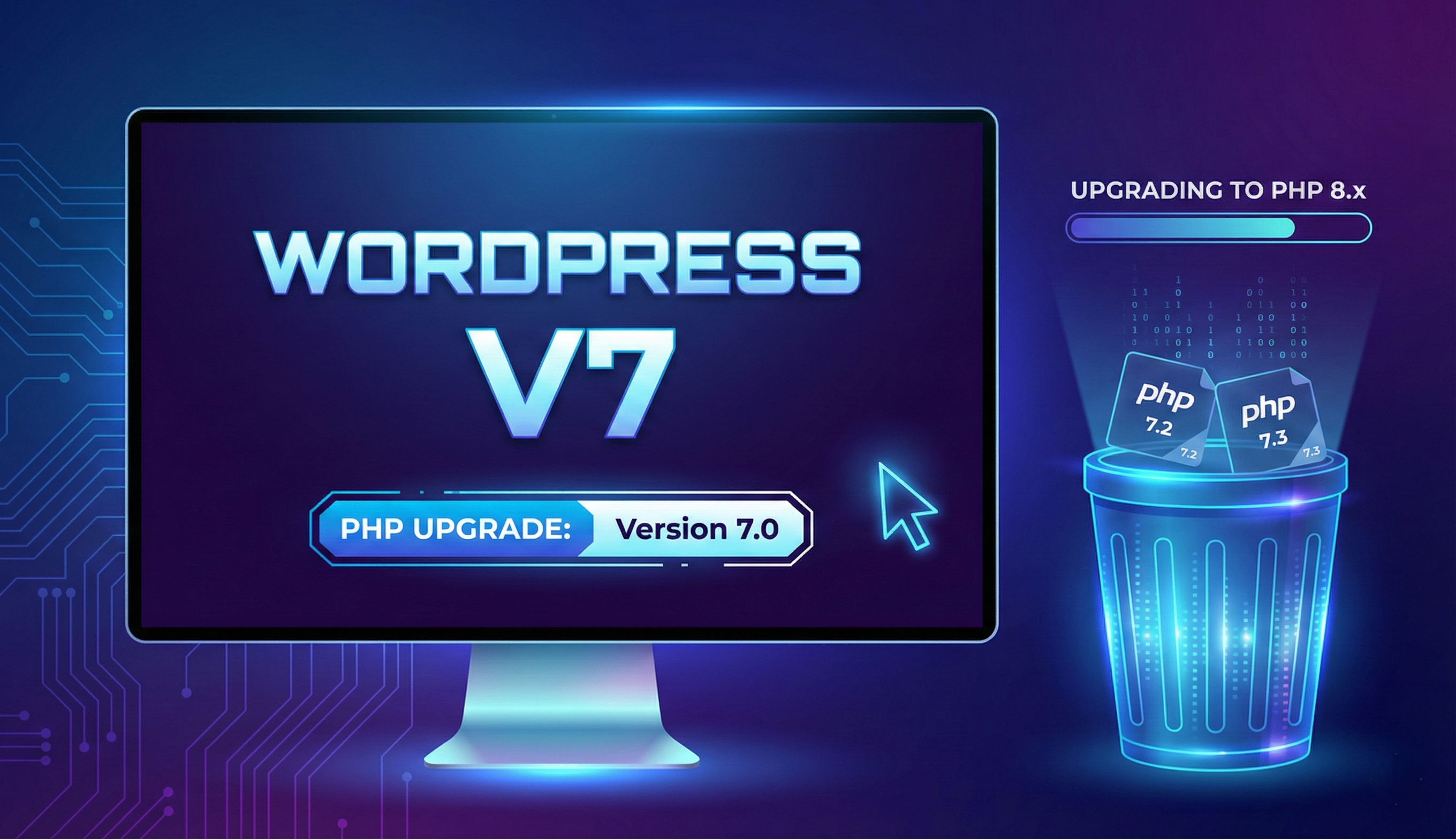
The WordPress landscape is about to get a significant speed and security boost. With the upcoming release of WordPress 7.0 in April 2026, the project is officially waving goodbye to PHP 7.2 and 7.3. 🗓️
While this might sound like a technical hurdle, it’s actually a massive win for the ecosystem. Let’s dive into why this change is happening and how it affects your website. 🛠️
Why the Change? The 5% Rule 📉
WordPress has a long-standing policy: it only increases minimum PHP requirements once usage of older versions drops below 5%. Current statistics show that PHP 7.2 and 7.3 combined now account for less than 4% of active installations. This triggered the deprecation process, allowing the core team to modernise the software we all rely on.
Currently, PHP 8.2 and 8.3 are the most popular versions, making up nearly 45% of the community. By moving away from outdated versions, WordPress can finally shed years of "technical debt." 🧹
The Benefits: Faster, Safer, Better ⚡
Raising the bar for PHP support isn't just about housekeeping. It offers tangible benefits that compound over time:
Performance Boosts: Newer PHP versions are significantly faster and more efficient with server resources. 🏃💨
Enhanced Security: Older versions stop receiving security patches from the PHP team. Moving to PHP 8.x ensures your site is protected against modern vulnerabilities. 🛡️
Developer Productivity: Theme and plugin developers can use modern coding standards, better AI integrations, and more robust testing workflows without worrying about breaking older sites. 💻
Beta Support for the Future: WordPress Core is already in beta support for PHP 8.4 and 8.5, ensuring you can stay ahead of the curve. 🌟
What if You’re Still on PHP 7.2 or 7.3? ⚠️
If your site is still running on these older versions come April 2026, it won't break immediately, but you will be "locked out" of the latest features.
Sites on PHP 7.2 or 7.3 will stay on the WordPress 6.9 branch. While this branch will receive critical security updates where possible, it won't receive the new functionality or performance optimisations of version 7.0. The Gutenberg plugin will also require PHP 7.4 as a minimum going forward. 🛑
How to Prepare (The Easy Way) 🖱️
The recommended version for WordPress 7.0 is PHP 8.3 or higher.
To update your version, check your hosting control panel. Most modern hosts provide a simple "PHP Version Manager" or a toggle within your site settings. You don't usually need to touch a single line of code or use a command line to make the switch. 🖥️
Before upgrading your live site, it is always a good idea to:
Create a backup: Ensure you have a fresh restore point. 💾
Test on a staging site: If your host provides a staging environment, test the new PHP version there first to ensure your themes and plugins are compatible. 🧪
Check compatibility: Verify that your active plugins and themes support PHP 8.3. 🔍
Final Thoughts 💭
April 2026 might feel like a long way off, but modernising your PHP version today gives you better performance and security immediately. Don't wait for the deadline—get your site PHP 8.3-ready now! 🚀✨